
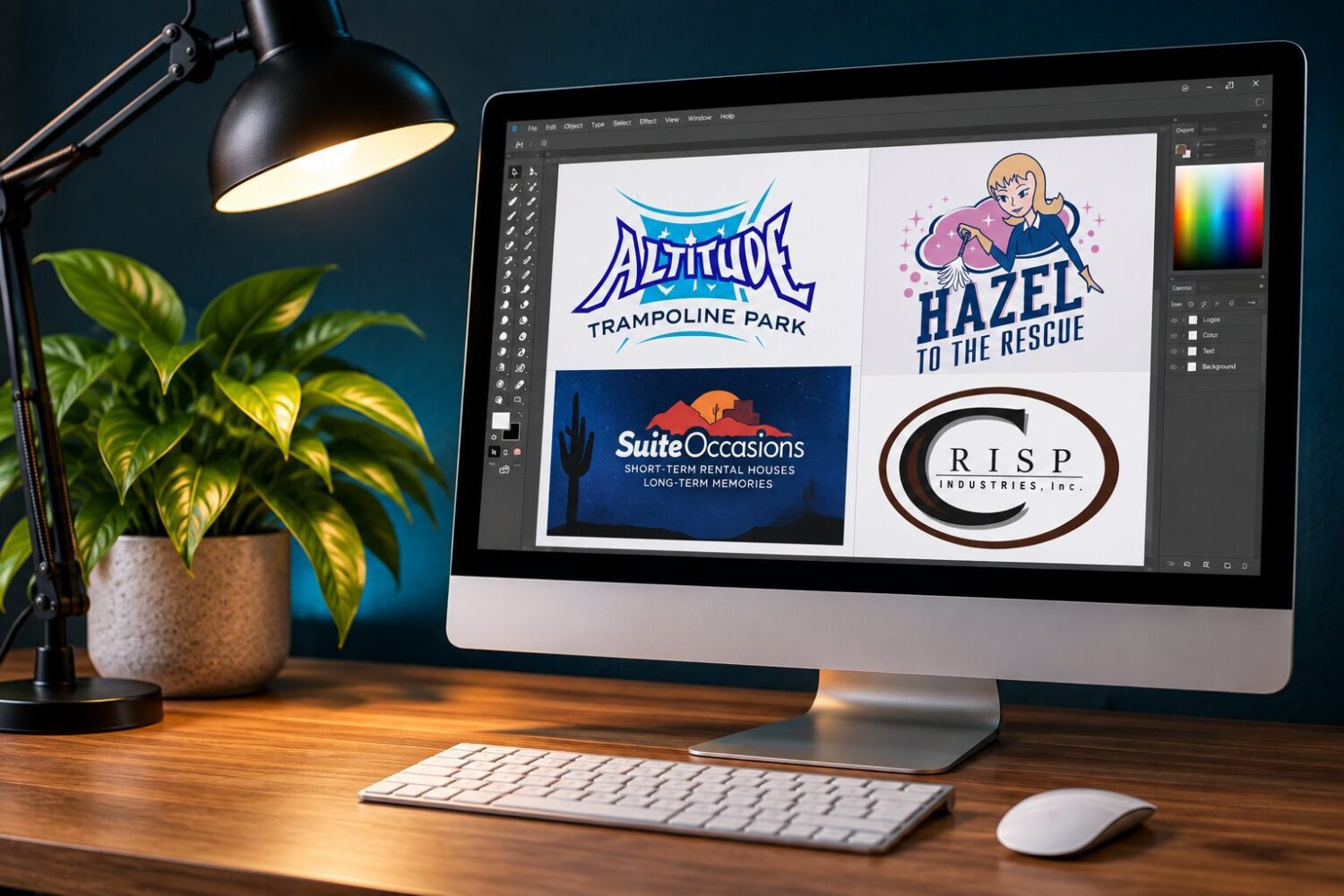
More Than a Logo: Building a Brand People Recognize
A logo may be the most recognizable part of a business’s identity, but it is only one piece of a much larger picture.
Think about the businesses you recognize immediately. You may know them by a particular color, typeface, photography style, packaging, signage, or even the way their marketing materials are laid out. Those elements work together to create a visual identity that customers learn to associate with the business.
That is where brand identity services come in.
Brand identity services help businesses develop and coordinate the visual elements that represent them, creating a consistent look that can carry across websites, social media, advertising, signage, print materials, and other customer touchpoints.
 The American Marketing Association defines brand identity as the visual and symbolic elements that represent a brand, including its name, logo, color scheme, typography, and design elements.
For a broader explanation of brand identity and related branding concepts, the American Marketing Association’s branding resource explains how identity, positioning, and brand equity contribute to the way a business is recognized and perceived.
What Do Brand Identity Services Include?
The exact scope varies depending on the business and how established its existing identity is. A startup creating its first professional image has very different needs from a 20-year-old company whose branding simply feels dated.
Brand identity services can include:
- Logo design or logo refresh
- Primary and secondary logo variations
- Color palette development
- Typography selection
- Graphic elements and visual styles
- Photography or imagery direction
- Social media graphics
- Business card and stationery design
- Print and promotional design standards
- Brand style guidelines
The objective is not to make every marketing piece look identical. It is to establish enough visual consistency that different materials clearly look like they came from the same company.
Cdesigns Marketing’s brand identity design services help businesses coordinate logos, colors, typography, graphics, print materials, websites, signage, and other visual elements into a more consistent business identity.
Brand Designer vs. Graphic Designer
There is considerable overlap between brand design and graphic design, but they are not quite the same job.
Brand design establishes the visual system. Graphic design applies visual communication to specific pieces such as advertisements, brochures, social graphics, presentations, signs, direct mail, or other materials.
One way to think about it is that your brand identity establishes the visual vocabulary. Graphic design uses that vocabulary to communicate.
Once a visual identity is established, professional graphic design services can carry that identity into individual marketing pieces while maintaining a consistent look across campaigns and platforms.
Isn’t a Logo the Same Thing as a Brand Identity?
No. Your logo is an important part of your identity, but it is not the entire identity.
A logo identifies the business. A brand identity creates the broader visual environment surrounding it.
Imagine receiving a beautifully designed business card from a company and then visiting a website with completely different colors, fonts, imagery, and design. Next, you visit its social media page and encounter yet another look.
The company technically has a logo, but it does not have a cohesive visual presence.
A strong identity helps connect those experiences.
This is particularly important as businesses accumulate more marketing materials over time. Without some visual direction, every new brochure, web page, sign, social graphic, presentation, or advertisement can gradually move the brand in a different direction.
Building your brand identity? See how Cdesigns Marketing can create a consistent look that works across your website, print, social media, and more.
Why Brand Consistency Matters
Consistency makes recognition easier.
Customers rarely encounter a business in only one place. Someone might see a social media post today, visit the website next week, receive a brochure a month later, and eventually drive past the company’s sign.
Those interactions should reinforce one another.
Your brand identity does not need to be elaborate to accomplish that. A small business may simply need a strong logo, defined colors, complementary fonts, and some basic design standards.
What matters is that those choices are intentional and repeatable. Our article Website Launch Checklist: 10 Things Your Small Business Website Needs explains why branding should also be considered during website planning so the finished site looks and feels like the same business customers encounter elsewhere.
When Does a Business Need Branding Identity Services?
A new business is an obvious candidate, but established companies often need brand identity work too.
Your business may be ready for professional brand identity services if your logo looks dated, your marketing materials no longer match, your company has changed significantly since its original branding was created, or your competitors simply look more polished and current.
Another warning sign is the “different designer, different look” problem. If every new project starts from scratch because there are no established visual standards, inconsistency can build quickly.
A brand refresh does not necessarily mean abandoning everything customers already recognize. Sometimes the better solution is to modernize existing elements while preserving the parts of the identity that still work.
Your Brand Lives in More Places Than You Think
A brand identity needs to work in the real world.
That means considering how colors reproduce in print, whether a logo remains legible at small sizes, how typography works on a website, what happens when the logo appears on a sign, and whether the visual system is flexible enough for social media, presentations, advertising, and future marketing materials.
Print can be particularly revealing because design choices become physical.
Our guide to choosing paper stocks and finishes explores how even the weight, texture, and finish of printed materials can reinforce the impression a brand is trying to create.
The same principle applies to brochures. In Designing Brochures That Achieve Results, we look at how brand consistency, typography, imagery, hierarchy, and print choices work together in a finished marketing piece.
A Strong Brand Identity Gives Marketing a Starting Point
One of the practical advantages of developing a brand identity is that future marketing becomes easier.
Instead of deciding what every new piece should look like from scratch, your business already has a visual foundation.
A new website can draw from it. So can a brochure, social campaign, trade show display, sign, presentation, email graphic, or advertisement.
That does not mean good branding never changes. Businesses evolve, audiences change, design trends shift, and visual identities occasionally need to be refreshed.
But there is a big difference between intentionally evolving a brand and accidentally changing it every time something new is designed.
Does Your Business Need a Brand Designer?
You do not need an enormous branding program simply because you own a business.
You do need an identity that accurately represents the business you have today and can be used consistently wherever customers encounter you.
For a new company, that may mean starting with a professional logo and basic visual direction. For an established business, it may mean refreshing outdated elements or finally bringing years of disconnected marketing materials under one cohesive identity.
The right brand identity services should give you more than attractive graphics. They should give your business a visual foundation you can continue building on.
Is Your Brand Sending the Right Message?
Whether you’re starting from scratch or wondering if your existing branding needs a refresh, Cdesigns Marketing can help you evaluate what you have and determine what your business actually needs.

